Jedi Order
The Last JediThe Jedi Order is a tradition of Force-users and teachers left on the brink of extinction by the Empire, but its destruction does not settle the question of its future. In the aftermath, Jax Pavan becomes both a possible last bearer of its knowledge and a living sign that the Order may rise again. His struggle is not simply to survive: it is to decide what the Jedi’s inheritance requires of him when the institution that formed him has been swept away.
Identity and Destruction
The Jedi Order trained Force-sensitive people as Jedi, including Padawans, and drew members from many worlds and cultures. Jax recalls growing up and training among Padawans who included males and females from hundreds of cultures. That breadth stands in direct contrast to societies where access to the Force is restricted by birth or gender, and helps define the Order as more than a local tradition.
The Empire’s destruction of the Order is the decisive political and personal rupture behind the novel’s present. Tuden Sal attributes the Order’s fall to Palpatine, arguing that its destruction cleared the way for the Emperor’s unchecked rule. For Jax, the loss is also immediate and uncertain: he knows the Order has been eclipsed, but cannot know whether every Jedi has died. The surviving Antarian Rangers offer a fragile parallel. They, too, have vanished from Imperial scanners while remaining alive, giving Jax reason to hope that the Jedi might not be as extinct as they seem.
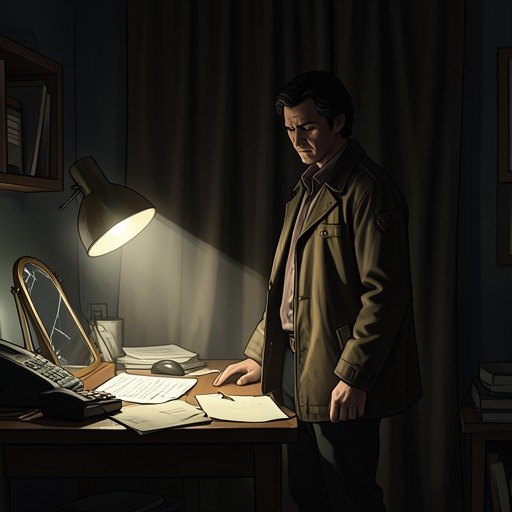
The destruction is made concrete through Jax’s encounter with the Jedi Temple in a disorienting vision. He sees its corridors burning and hears younglings screaming; he understands that Anakin will kill them with his own hand. The scene gives the Order’s collapse a human scale, locating its ruin not only in the loss of a public institution but in the threatened lives of its youngest members. The paired maxim that choice entails loss and indecision brings Jax’s anguish into the vision: knowing the outcome does not make the decision to leave easier.
Survivors and the Order’s Legacy
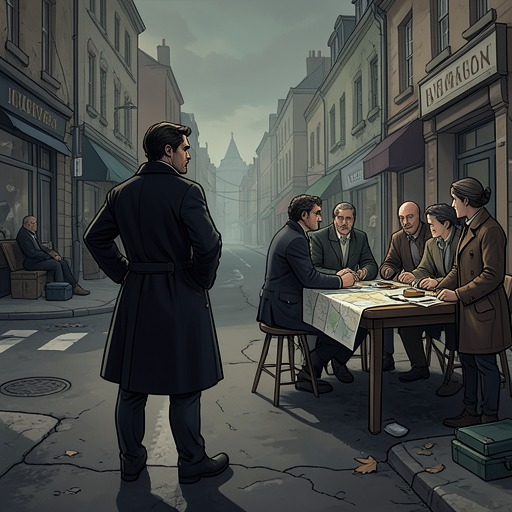
Jax’s uncertainty about being the last Jedi shapes how others approach him. Aren and Sal know that he is a Jedi, though that identity is not generally known. Aren sees his abilities and reputation as a possible means of bringing independent resistance groups together. Some want immediate bloodshed; others prefer to wait. A Jedi at the head of the effort, Aren believes, could give those divided groups a shared mandate and offer people who think the Order is dead a reason to rally.
Jax refuses that proposed role at this point. His first priority is to find Thi Xon Yimmon and free him. When he later explains his course to Sal, he distinguishes it from revenge: he wants to free Yimmon, help free the galaxy from the Empire, and contribute to the Jedi Order’s eventual return. Sal answers with a different understanding of Jax’s responsibility. If he is the last Jedi, Sal warns, he may be the only person able to pass Jedi knowledge to future Padawans. The argument makes survival itself a duty: Jax’s life could preserve the possibility of a future Order. Jax understands the risk, but does not let that possibility cancel his commitment to rescue Yimmon.
The possibility that Jax is alone is never wholly resolved. At a hidden location protected by transponder codes, he says there are no more Jedi. Den Dhur hears the fear beneath the statement and answers that the group must take care of the one they have. On Dathomir, women who recognize his Jedi craft question whether he can truly be Jedi after hearing that the Empire destroyed the Order. Jax insists that he is; the women, in turn, say they felt the Jedi’s dying echoes in the Force. Their perception confirms the scale of the loss without proving that no survivors remain.
The Jedi Among Other Traditions
The Order’s breadth becomes especially clear in Jax’s encounter with the Singing Mountain Clan. A clan member initially regards him as inferior, then recognizes him as a rare companion in the Force. Jax challenges the assumptions behind that change in status. In the Jedi community where he trained, he says, male and female Padawans learned together; on Dathomir, a man might instead be enslaved and forbidden to channel the Force, regardless of his potential. Such a restriction impoverishes both the individual and the clan, he argues. The exchange sets the Jedi model of training across cultures against a local rule that denies men the opportunity to become Force adepts.
The Order is also represented by individuals whose stories survive its fall. Ki-Adi-Mundi, a Cerean member of the Jedi High Council, had led the Grand Army of the Republic in key battles and died during the violence and treachery of Order 66. He was one of Thi Xon Yimmon’s heroes. The detail complicates the idea of the Jedi as remote symbols of authority: even Yimmon, himself a figure of heroic stature, had looked to a Jedi who came before him. The chain of admiration and instruction gives the Order a human legacy that survives the deaths of its members.
Resistance, Responsibility, and the Use of Power
For those fighting the Empire, the Jedi’s identity carries political force as well as spiritual meaning. Sal describes Palpatine as responsible for the destruction of the Order and for the losses of Yimmon and Laranth Tarak; he frames opposition to the Emperor as a battle belonging to everyone. But the resistance is not united on what that battle permits. Sal’s plan to attack Palpatine’s seaside villa risks destroying the building and nearby homes, and Yimmon, Sal reflects, would have balked at killing the Emperor at the cost of so much collateral damage. The contrast matters to the Order’s legacy: the cause of opposing tyranny does not make every means of resistance acceptable to every member of the resistance.
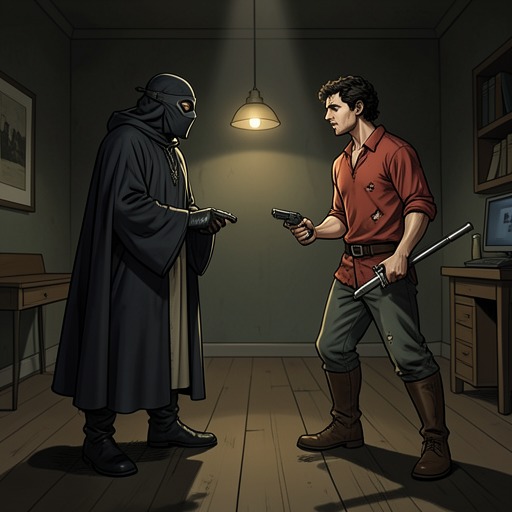
Jax’s conduct likewise shows that Jedi ability can be turned directly toward survival and force. When guards converge on him during a confrontation with Xizor, Jax blocks hidden exits with severed tapestries and sends a storm of objects at the bodyguards with a Force thrust. The episode presents a Jedi as a capable combatant, but it does not make violence his defining objective. His stated priorities remain Yimmon’s liberation and the eventual rebuilding of the Order, rather than revenge on Vader.
Rebuilding Beyond the Last Jedi
The novel’s ending changes the meaning of Jax’s possible solitude. Sitting with Laranth Tarak’s miisai tree, he experiences the Force as flowing through its roots and needles, the planet beneath the ship, and the space beyond it. He understands that this connection joins him to Jedi who came before and those who will come after; it also connects him to Laranth. The tree makes continuity tangible without suggesting that grief or loss has been undone. Jax realizes he need not hold on to Laranth as though their connection could otherwise disappear.
That recognition supports a new account of the Order’s future. Jax tells I-Five that the old Jedi Order has been swept away, not erased forever: a new one may rise from its ashes, whether or not Jax lives to help usher it in. He then acts on that belief, setting out to contact someone in the Singing Mountain Clan whom he considers both open-minded and full of potential. If he is the last Jedi, he accepts that rebuilding falls to him. The ending therefore leaves the Order neither restored nor simply mourned; its continuation becomes a task carried forward through teaching, connection, and refusal to surrender to evil or darkness.